Echoes of America Journal • The land and the people who shaped it
There was a time when the heart of an American town could be found along a single stretch of road. Main Street brought together the post office, the church, the blacksmith, the school, the hotel, and the general store. Wagons rattled past shop windows, neighbors stopped to exchange news, and travelers arrived with stories from places just beyond the horizon. Every town had its own character, but these familiar places helped give shape to community life.
The general store: More than a place to shop
In the days before supermarkets and online shopping, the general store supplied many of the ordinary necessities of daily life. Shelves might hold flour, coffee, salt, canned goods, sewing needles, lamp oil, tools, and bolts of cloth. Behind the counter, a storekeeper often knew which families needed credit until harvest, who had moved into the neighborhood, and what news had arrived by rail or mail coach.
The store was also a gathering place. Farmers came in from the surrounding countryside; children might be sent to fetch a household item; and neighbors paused to talk about the weather, crops, local politics, or a coming celebration. In a small community, commerce and conversation often shared the same wooden floorboards.
A street built around everyday life
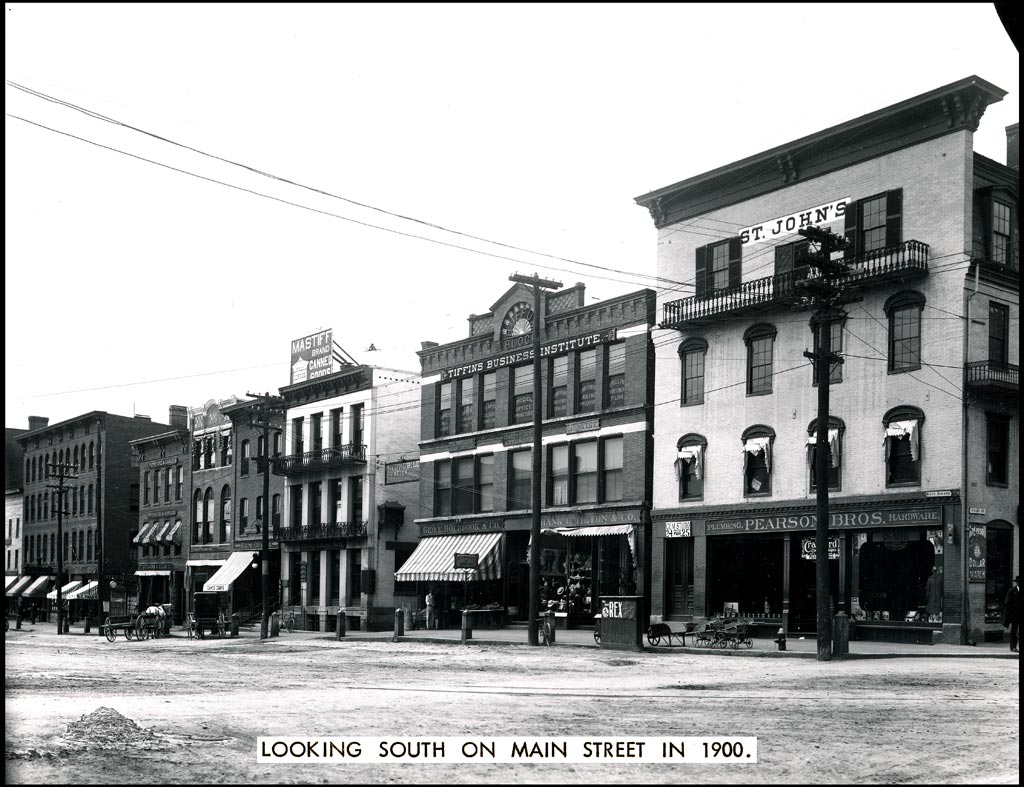
Main Street was rarely just a row of businesses. It was a public stage where the rhythms of the town could be seen. A delivery wagon might stand outside the feed store, a barber’s striped pole could turn slowly in the breeze, and a hand-painted sign might advertise harness repairs or fresh bread. On market days and holidays, the street grew lively with visitors from nearby farms and villages.
Railroads, river landings, and crossroads helped determine where towns grew. Some places flourished because they served as shipping points or county seats. Others remained small, shaped by local trades, nearby farmland, and the steady habits of generations. When transportation routes changed, a once-busy business district might quiet down—but its buildings still told a story about the people who had gathered there.
From the Archives: The General Store
Step inside a few surviving American general stores in this short documentary, and see why these shops were more than places to buy everyday goods: they were gathering places at the heart of small-town life.
The people behind the storefronts
Behind each storefront were people whose work kept the town going: shopkeepers, carpenters, blacksmiths, printers, teachers, mill workers, farmers, and families who balanced long days with the responsibilities of home. Their lives were not always easy. Economic downturns, fires, poor harvests, changing industries, and unequal opportunities could test even close-knit communities. The familiar image of an old town is most meaningful when we remember both its warmth and its hardships.
Small towns were never isolated from the larger American story. New arrivals brought different languages, skills, faiths, and traditions. Mail, newspapers, catalogues, and trains connected residents to national events and distant markets. The local and the national met every day on Main Street.
Preserving the echoes
Today, old storefronts, courthouse squares, brick sidewalks, and weathered signs offer glimpses of earlier ways of life. Some buildings have become museums or cafés; others continue to serve their communities in new forms. Historic photographs can preserve details that memory alone may lose: the lettering on a shop window, the shape of a wagon, the clothes people wore, or the way a street looked before modern traffic changed it.
When we look closely at these places, we see more than architecture. We see people making a living, raising families, sharing news, solving problems, and building a sense of belonging. The old general store and the town street remind us that history is not only made by famous names. It is also made in ordinary places by people whose lives gave a community its character.
A town’s story lives not only in its buildings, but in the everyday lives that once filled its streets.
COMING NEXT IN ECHOES OF AMERICA
Coming Friday: Life Along the Oregon Trail
Our next story follows the families who traveled west along the Oregon Trail—facing difficult terrain and uncertain days, while crossing lands that were already home to Indigenous peoples.


Leave a Reply