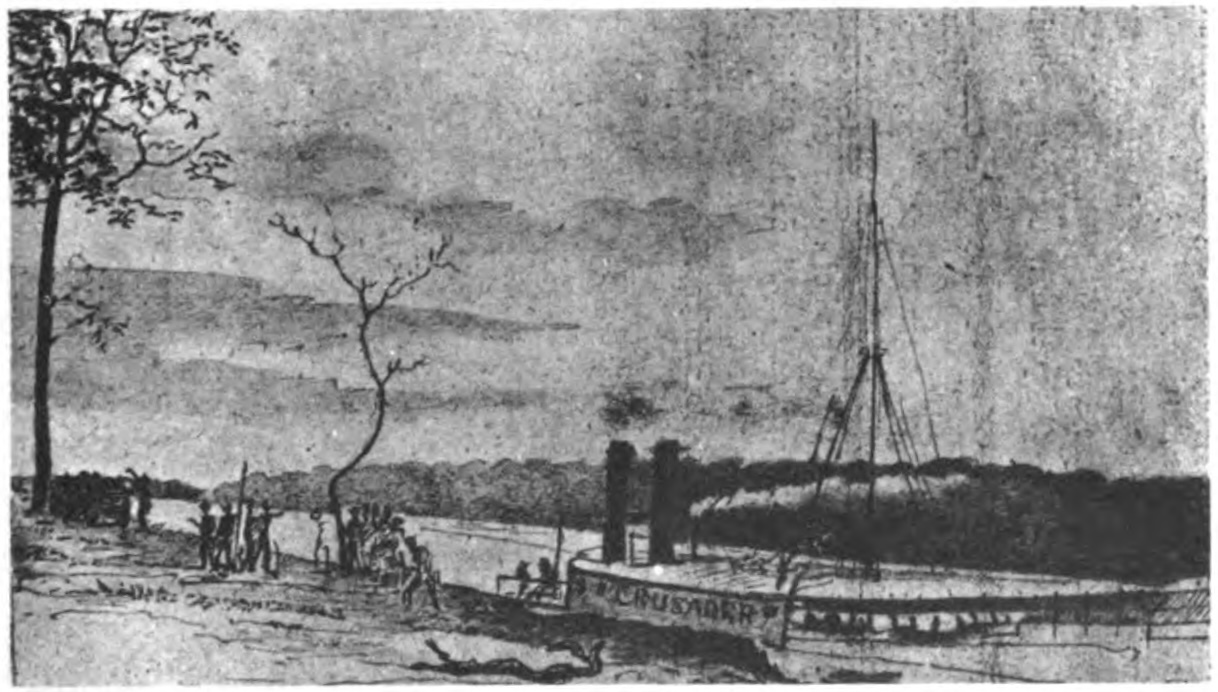

Imagine standing on a river landing before sunrise. The air is damp, the water moves darkly past the bank, and somewhere downstream a steamboat whistle announces that the day’s work is about to begin. Farmers have goods to ship. Merchants are waiting for supplies. Travelers are checking their belongings. For a river town, a boat arriving could mean business, news, opportunity—and sometimes heartbreak.
Before railroads stitched the continent together and long before highways carried trucks across the Midwest, the Mississippi River was one of America’s great highways. It moved people and goods through the continent’s interior, connecting small settlements with large ports and linking distant communities in a shared web of commerce.
A Road Older Than the Nation
The river was not an empty corridor waiting to be discovered. Indigenous nations had long used the Mississippi and its tributaries for travel, trade, diplomacy, fishing, and cultural exchange. Their communities understood the seasons, currents, floodplains, and local geography through generations of experience. European empires and, later, the United States entered a region already shaped by Native knowledge and networks.
As settlements and markets grew, river landings became natural meeting places. A landing might be little more than a sloping bank and a few buildings, yet it could connect a farm miles inland to markets far away. Cargo moved from wagons to boats and from boats to warehouses. News and fashions traveled with the same traffic.
When Steamboats Changed the Rhythm
Steamboats did not make river travel effortless. Pilots still had to contend with shifting sandbars, snags, fog, changing channels, and dangerous currents. Fires and boiler explosions could turn a routine trip into a disaster. Yet steam power made regular upstream travel more practical and helped expand the movement of cotton, grain, timber, manufactured goods, passengers, and mail.
The illustration above, made in the nineteenth-century era of expanding river commerce, is a reminder that pictures are historical evidence too. They show not only vessels and landscapes but also what artists and publishers wanted viewers to notice. For another period view, the Library of Congress preserves a lithograph titled “Mississippi river steamboat,” published around 1895. Its scenes reveal how river imagery could combine transportation, labor, plantation life, and the broader economy into one picture. Such images should be read carefully: they document how the river was represented, not every experience of the people who lived and worked beside it.
The People Behind the Cargo
River commerce depended on many kinds of labor: pilots who read the channel, deckhands who handled lines, mechanics who kept engines running, warehouse workers who moved cargo, teamsters who hauled goods inland, and merchants who negotiated prices. Families lived in river towns because the traffic supported shops, hotels, repair businesses, and markets.
But the prosperity of the Mississippi Valley was never shared equally. Much of the river economy was bound to slavery and the forced labor of enslaved African Americans, particularly in the cotton trade. Native nations faced dispossession and pressure on their homelands as settlement and federal policy expanded. To tell the river’s story honestly, we must remember both the skill and ambition that made river travel possible and the human suffering built into parts of the system.
When the Railroad Arrived
Railroads eventually redirected traffic, changed shipping costs, and helped some towns grow while leaving others behind. Yet the river did not become irrelevant. Barges still carry enormous quantities of goods, and river communities continue to live with its gifts and its risks. Floods can reshape neighborhoods; the waterway remains central to industry, ecology, recreation, and memory.
Here in the American Midwest, the Mississippi reminds us that geography is never merely scenery. It shapes the work people do, where towns take root, what families remember, and how communities connect with the wider world. When you stand on a riverbank today, look for the old landing places and imagine the voices that once gathered there: the boat crew calling to shore, the merchant waiting for a shipment, the child watching a vessel disappear around the bend.
That is the kind of history we hope to share at Echoes of America Journal—not just dates and machines, but the lives and choices carried along with them.
Watch and Explore
Continue exploring with the National Park Service’s short resource on steamboats on the Missouri River. For a primary-source image, visit the Library of Congress record for “Mississippi river steamboat”.
A Pilot Named Samuel Clemens
One river worker whose name eventually reached readers around the world was Samuel Langhorne Clemens, better known as Mark Twain. Raised in Hannibal, Missouri, Clemens learned the Mississippi from the working side of the river. In 1857 he began training as a steamboat pilot under Horace Bixby, learning to read channels, sandbars, currents, and landmarks. It was demanding work: a pilot had to remember how the river behaved and how it changed, not simply admire its scenery.
Clemens later drew on that experience in his writing. His pen name came from a river sounding call indicating a depth of two fathoms, a phrase that belonged to the practical language of navigation. His story helps us see the river as a workplace and a teacher. Behind the romance of the steamboat were long hours, specialized knowledge, dangerous conditions, and crews whose labor made each journey possible.
For a documented account, explore the National Endowment for the Humanities’ Documenting Mark Twain and the National Mississippi River Museum and Aquarium’s Mark Twain biography.
Coming Up Next
On Friday, we visit Main Street America, where shopkeepers, customers, newspaper offices, and neighborhood businesses made the downtown the everyday meeting place of a town.
Join us Friday for “Main Street America: The Stories Behind Small-Town Storefronts.”
Leave a Reply