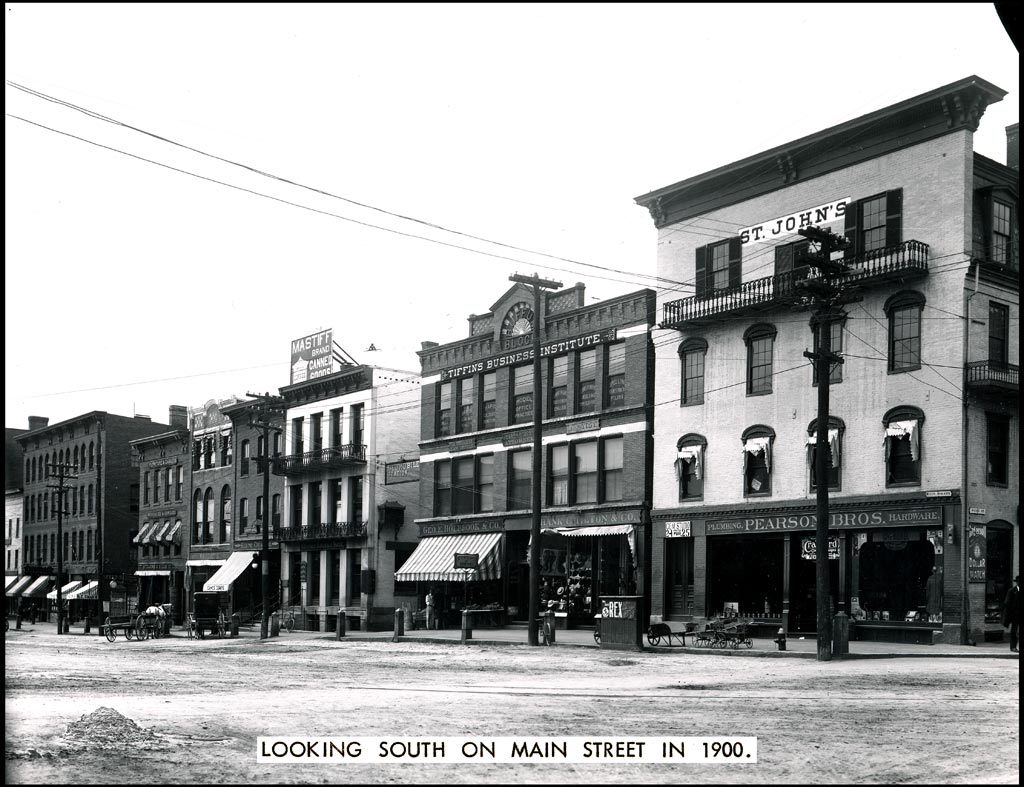

Picture a small American town at the beginning of the twentieth century. A shopkeeper sweeps the sidewalk before opening the door. A delivery wagon rattles over the street. Someone stops at the post office to collect a letter from a relative in another state. Neighbors pause to exchange news, and a child presses close to a store window to study something just beyond reach.
That ordinary morning is the heart of Main Street America. The storefronts were not simply places to buy goods. They were where work, family life, local news, and community memory met. A town’s grand events might appear in history books, but much of its character was made in the small daily encounters that took place along its main street.
A Street Built Around Daily Needs
Many American towns grew around a courthouse square, crossroads, mill, river landing, or railroad depot. Main Street gathered essential services close together at a time when most people traveled slowly and often depended on businesses within walking, wagon, or streetcar distance. General stores offered food, fabric, tools, household goods, and sometimes credit. Blacksmiths repaired equipment; hotels welcomed travelers; newspapers carried local announcements and arguments; banks helped finance farms and businesses.
Look closely at the photograph above. The buildings are more than a backdrop. Their signs, upper windows, awnings, and doorways record how people used the street. Historic photographs can preserve details that later renovations erase: painted advertisements, hitching posts, delivery wagons, shop names, and the way people dressed for an ordinary day.
The Library of Congress holds thousands of photographs of American commercial streets. One example is its documented image of Main Street in Laconia, New Hampshire, photographed between 1900 and 1910. The record identifies the Detroit Publishing Company collection and provides a starting point for examining a real town rather than relying on a generic picture of the past.
More Than Shopping
Main Street could be a community’s informal living room. People gathered for parades, election days, holiday displays, public announcements, and celebrations. A newspaper office might report a new business opening beside a school concert, a church supper, or a dispute over town improvements. Such local notices can seem small beside national events, but together they reveal what residents cared about and how a community understood itself.
Imagine reading a hundred-year-old newspaper and finding a notice that a merchant had received a new shipment, a family was visiting from a nearby county, or a local group was planning a benefit supper. These details bring the past within reach. They remind us that the people who lived then were not historical characters to themselves. They were busy with errands, bills, celebrations, disappointments, and plans for tomorrow.
Who Belonged on Main Street?
Not everyone experienced the street in the same way. Race, class, gender, disability, and economic circumstance affected who could own a business, obtain credit, enter certain establishments, or take part in civic life. Some towns enforced segregation or excluded particular groups from opportunity. A warm portrait of community should not hide these realities. It becomes more meaningful when it recognizes both the bonds people formed and the barriers they faced.
Local newspapers, business directories, census records, city maps, and photographs can help recover these layered stories. A directory may identify a tailor or boardinghouse keeper whose name has otherwise faded from memory. A newspaper advertisement can show what a shop sold and how it tried to attract customers. A photograph may reveal a streetcar line or a building that later disappeared.
Reading the Street Today
When you visit a historic downtown, look above modern shop windows. Brickwork, cornices, old dates, and blocked-up doors can reveal earlier uses. A building now housing a café may once have been a hardware store; an upper floor may have held offices or rented rooms. The street itself becomes an archive, preserving clues for anyone willing to slow down and look.
Perhaps you remember a store from your own childhood—a place where the owner knew your family, where a bell rang above the door, or where a purchase came with a conversation. Those memories are part of the same American story. Main Street matters because it connects the large sweep of history with the places where ordinary people lived it.
At Echoes of America Journal, we want to keep those places and people in view. The storefronts may change, but behind every old facade is a story worth finding.
Watch and Explore
Explore the Library of Congress collection of Main Streets across America, with photographs from different regions and eras. These archival images can help us compare how towns looked and how their streets changed over time.
A Real Shop Counter: Harry Truman and Eddie Jacobson
A small business could shape a person’s habits and friendships long after its doors closed. Before he entered national politics, Harry S. Truman operated a men’s clothing store in Kansas City with his wartime friend Eddie Jacobson. Their haberdashery opened in 1919 and struggled through the postwar recession; it closed in 1922. The experience gave Truman a close view of the pressures that face a shopkeeper: inventory to pay for, customers to serve, credit to manage, and the constant hope that tomorrow’s sales would cover tomorrow’s bills.
Kansas City was larger than the small towns pictured in many Main Street photographs, but the daily work of a haberdashery—greeting customers, arranging merchandise, keeping accounts, and building trust—was familiar to merchants across America. Truman’s story is a reminder that a storefront was not just a facade. It was a livelihood, and often a wager on the future.
Explore the Harry S. Truman Presidential Library and Museum for biographical resources, and compare this personal story with period street photographs in the Library of Congress Main Streets collection.
Coming Up Next
On Monday, we leave the storefronts for the open prairie and explore the land, labor, and competing hopes that shaped the American Midwest.
Join us Monday for “The Prairie and the Promise: How the American Midwest Took Shape.”
Leave a Reply