Echoes of America Journal • The land and the people who shaped it
Long before highways crossed the continent and railroads stitched distant cities together, America’s rivers served as its great moving roads. They carried people, food, timber, furs, ideas, and ambitions. They connected inland farms to growing towns and linked communities to the wider world. To follow the rivers is to follow one of the central stories of the American landscape.
The Mississippi: A continent’s great artery
The Mississippi River gathers water from a vast network of tributaries and flows south to the Gulf of Mexico. Along its course, it has shaped wetlands and forests, nourished rich floodplains, and given rise to communities whose lives depended on its changing moods. Indigenous nations lived along these waters for thousands of years, building communities, trading, traveling, and maintaining deep cultural relationships with the river long before Europeans arrived.
For generations of settlers and merchants, the river offered a route into the continent’s interior. Its advantages came with risks: shifting channels, sandbars, floods, and powerful currents could make travel difficult. Yet the Mississippi remained a vital corridor for commerce and communication—and a witness to the conflicts, forced removals, and systems of slavery that shaped the region’s history.
Steamboats change the journey
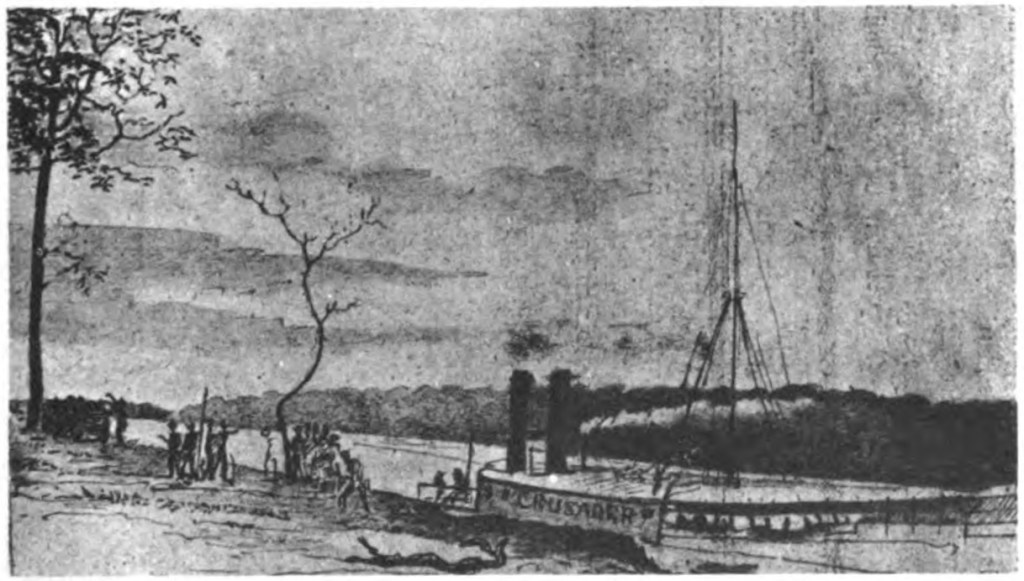
During the nineteenth century, steamboats transformed travel on many American rivers. Their regular schedules and ability to move upstream against the current helped carry passengers and cargo between river towns. Busy landings became places of arrival and departure, where farmers, shopkeepers, dockworkers, boat crews, and travelers crossed paths.
The riverfront could be noisy and crowded: ropes creaking, cargo moving, engines churning, and bells calling passengers aboard. A town’s fortunes might rise with its landing or fade when new transportation routes bypassed it. River life was not romantic for everyone—work could be dangerous, and the wealth carried by boats often rested on unequal labor and unequal opportunity.
From the Archives: The River (1937)
Step back into the past with this archival film from the U.S. National Archives. Released in 1937, The River explores the Mississippi and its tributaries, the communities shaped by their waters, and the challenges of living alongside a powerful river.
Historical film courtesy of the U.S. National Archives. Explore the film and its archival background.
Many rivers, many stories
The Ohio connected communities across the eastern interior and joined the Mississippi near present-day Cairo, Illinois. The Missouri reaches deep into the Great Plains, tracing routes used by Indigenous peoples, explorers, traders, and later settlers. Farther west, the Columbia has sustained communities and fisheries in the Pacific Northwest for countless generations. Each river belongs to a different landscape, yet all show how water can connect distant places while shaping local ways of life.
Rivers also remind us that history is not only found in capitals and battlefields. It lives in ferry crossings, mills, market squares, levees, fishing places, and small towns built beside the water. The landscape itself holds traces of labor, migration, ingenuity, loss, and renewal.
A living part of the American story
Today, rivers remain working waterways and essential habitats. They support communities, wildlife, recreation, and agriculture, while facing pressures from pollution, altered channels, flooding, and changing climate. Remembering their history can deepen our appreciation of the places they pass through—and of the people who have cared for, depended on, and fought over these waters.
At Echoes of America Journal, the great rivers are a starting point for exploring the country’s history and beauty: the broad sweep of a valley, the quiet of a wooded bank, the bustle of an old river town, and the stories carried from one generation to the next.
Every river carries more than water. It carries the memory of the land and the people who have lived beside it.
COMING NEXT IN ECHOES OF AMERICA
Coming Wednesday: Main Street America
Next, we leave the riverbanks for the familiar streets at the heart of small-town life. We’ll step inside the general store and discover how these gathering places helped connect neighbors and communities.


Leave a Reply